
Lauki Mewa Delight is a bottle gourd laddu that belongs to a tradition of lauki-based Indian sweets stretching back centuries — made by cooking grated lauki down in ghee with khoya, then combining it with fried gond, cashews, almonds, coconut, and cardamom. Unlike flour-based laddus, lauki is the hero here: its cooling nature, fibre, and subtle sweetness create a base that is lighter than besan or atta while still delivering real nourishment. At Vyanjika, we make this recipe for the home cooks and health-conscious professionals who want a festive sweet that does not come at the cost of ingredients they can trust. If you have been curious about what a laddu looks like when a vegetable does the work, this is it.
Ingredients
Makes approximately 25 laddus (1 kg total)
- Lauki (bottle gourd), peeled, grated, moisture squeezed out — 750g
- Ghee (clarified butter) — 220g (approximately 160g for cooking lauki, 60g reserved for frying gond)
- Gond (edible gum / acacia gum) — 60g
- Khoya (milk solids / mawa) — 220g
- Khaand (crushed sugar / desi khand) — 200g (adjust to taste)
- Badam (almonds), chopped or slivered — 50g
- Kaju (cashews), roughly chopped — 50g
- Kasa Hua Nariyal (grated coconut, fresh or desiccated) — 80g
- Elaichi (green cardamom), seeds ground to a fine powder — 1 teaspoon (approximately 8–10 pods / 5g)
Difficulty Level
Difficulty: High — This recipe involves four distinct sub-processes — moisture removal from lauki, 20–30 minutes of continuous stirring, temperature-sensitive gond frying, and judgment-based khoya incorporation — each of which can compromise the final result if rushed or misjudged.
How to Make Lauki Mewa Delight
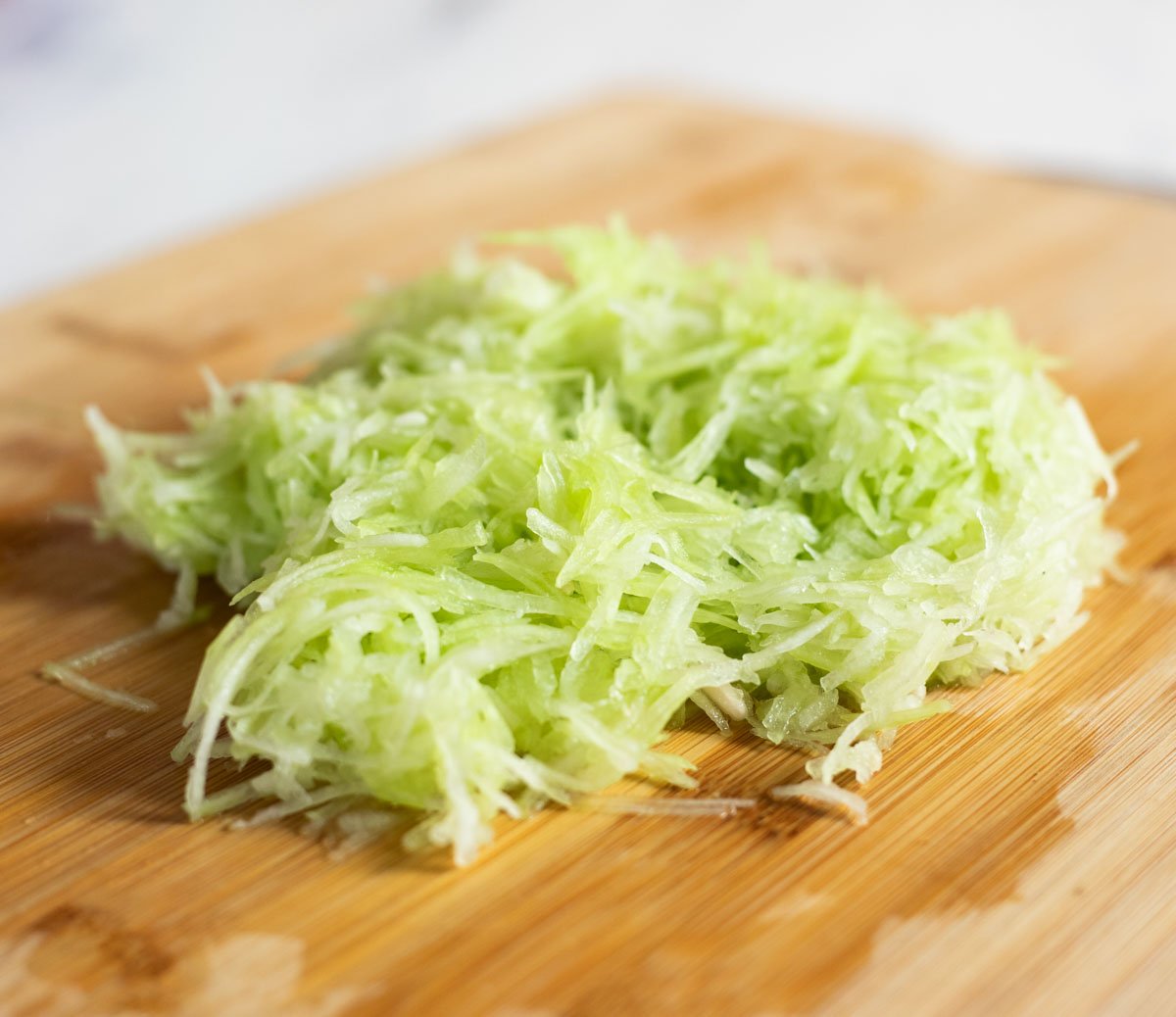
Peel and grate the lauki. Use the coarse (large-hole) side of a box grater. Do not use a fine grater — it causes excess surface area, faster oxidation, and a watery mixture that will not bind.
Squeeze out all moisture. Transfer grated lauki into a clean cotton cloth and squeeze firmly to extract as much water as possible. The lauki is approximately 92–96% water by weight — this step is non-negotiable. Squeeze in batches until the lauki feels almost dry to the touch.
Fry the gond separately. In a small pan, heat the reserved 60g ghee over medium-low heat. Drop gond crystals in a few at a time — they should puff up to 3–4 times their size within 30–60 seconds. Remove immediately with a slotted spoon before they darken. If the ghee is too hot, the gond turns bitter; too cool, it stays hard and chewy. Drain on a plate, cool completely, then crush coarsely by hand or with a rolling pin. Do not use a blender — coarse pieces give the laddu its crunch.
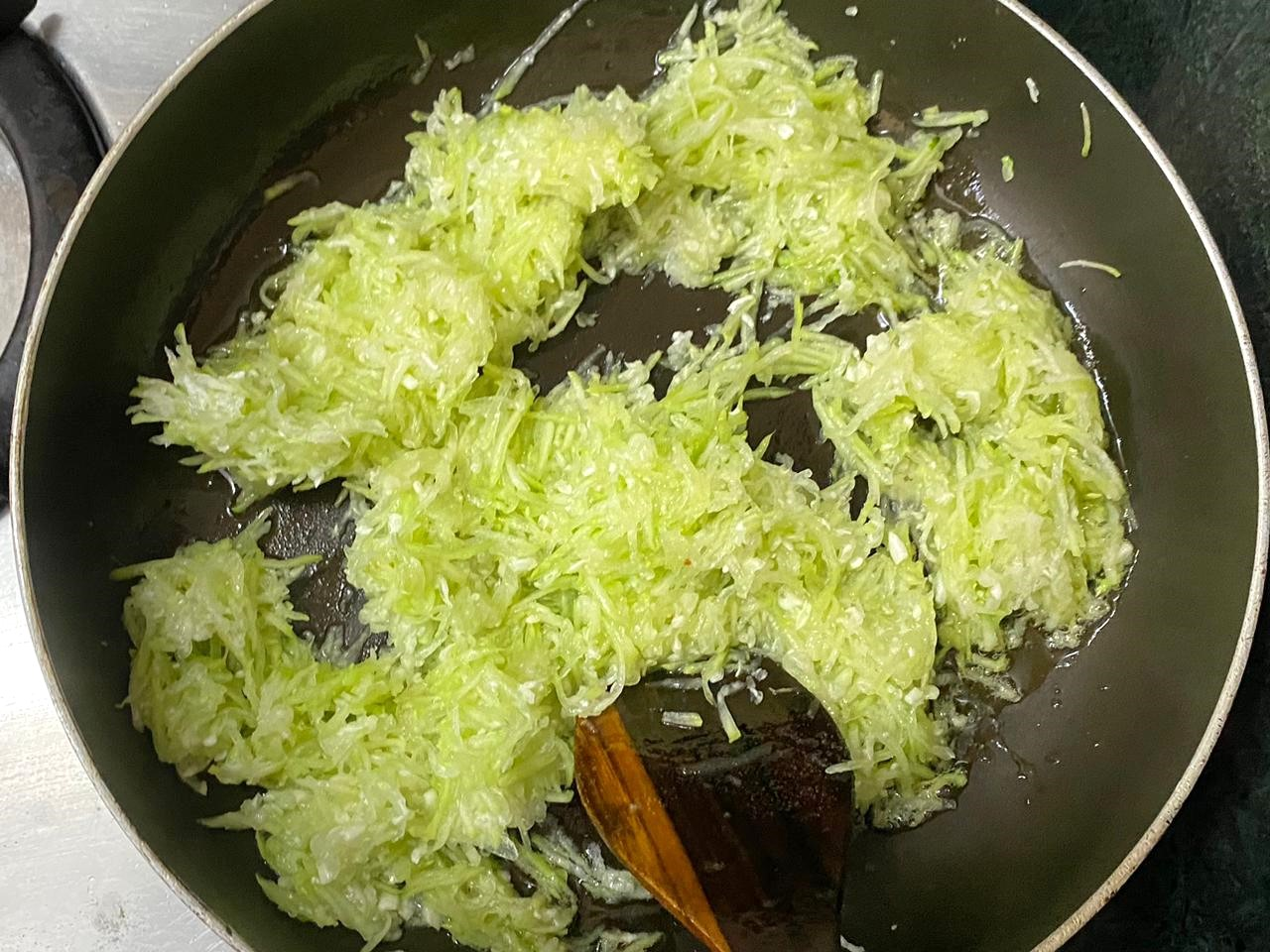
Cook the lauki in ghee. In a large heavy-bottomed kadai, heat the remaining 160g ghee over medium flame. Add the squeezed lauki and stir continuously. The lauki will release residual steam — keep stirring on medium flame for 20–30 minutes until all moisture has evaporated, the mixture turns light golden, and it begins to leave the sides of the pan. The correct endpoint: no steam rising, a nutty cooked aroma, and a slightly glossy, dry texture.
Add khoya. Reduce the flame slightly. Crumble in the khoya and stir continuously for 5–7 minutes until it is fully absorbed into the lauki, the mixture darkens slightly, and it comes together as a single cohesive mass that pulls away from the pan.
Add khaand and cook briefly. Add the powdered khaand to the pan. Stir well and cook for a further 3–4 minutes until the sugar dissolves completely. The mixture will briefly loosen as the sugar melts, then tighten again. Remove from heat and allow to cool for 10–15 minutes until warm but handleable.
Add remaining ingredients. To the cooled mixture, add the crushed puffed gond, chopped almonds, chopped cashews, grated coconut, and ground cardamom powder. Mix thoroughly until everything is evenly distributed.
Taste and adjust. Taste the mixture. Add a little more khaand if needed and briefly warm the mixture to dissolve before shaping.
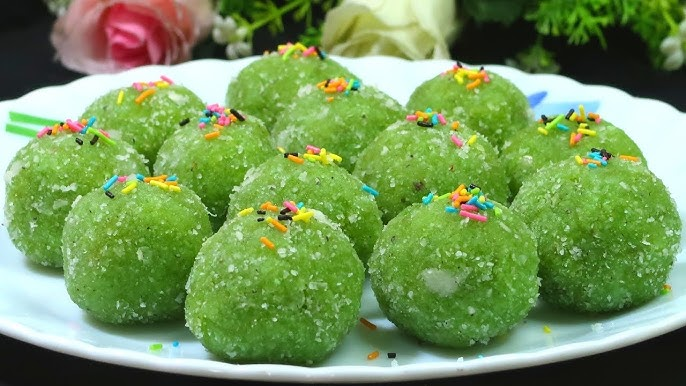
Shape the laddus. Grease your palms lightly with ghee. Take approximately 40g of mixture and press firmly in your palm, then roll between both palms into a smooth ball. Work while the mixture is warm — it is pliable at this stage. If it feels dry or crumbles, warm it gently in the pan for 30 seconds before trying again.
Set and store. Arrange shaped laddus on a tray and cool completely at room temperature for 2–3 hours before transferring to an airtight container. They keep for 2–3 days at room temperature or up to 15–20 days in the refrigerator. Bring to room temperature before serving.
Benefits of Lauki Mewa Delight
- Vegetable-first mithai. Lauki is the primary ingredient at 750g — a laddu built on a cooling, low-calorie vegetable, not flour or grain. It delivers fibre, potassium, vitamin C, and iron as the base, not as an afterthought.
- Lighter than flour-based laddus. Each laddu is approximately 195 kcal — meaningfully less than a besan or atta laddu of the same size (~220–250 kcal). The difference comes from lauki replacing a heavier grain base.
- Bone and recovery support. Gond is rich in calcium and traditionally used in postpartum recovery to strengthen bones, joints, and connective tissue. Combined with the calcium from khoya and the protein from almonds and cashews, each laddu supports bone mineralisation.
- Naturally gluten-free. This recipe contains no wheat, semolina, or any gluten-bearing ingredient, making it safe for those with gluten intolerance or coeliac disease (use certified gluten-free gond and nuts to avoid cross-contamination).
- Good for batch preparation. These laddus refrigerate well for up to 3 weeks, making them ideal for festive gifting, Karva Chauth preparation, and keeping a supply on hand through the week without daily cooking.
- Full-spectrum nutrition. The combination of lauki (fibre, minerals), ghee (fat-soluble vitamins, butyrate), khoya (dairy protein, calcium), gond (calcium, warming properties), and dry fruits (vitamin E, magnesium, healthy fats) makes this a sweet where every ingredient earns its place.
Nutrition Value
Per serving: 1 laddu (~40g), from a batch of approximately 25 laddus
| Nutrient | Amount |
|---|---|
| Calories | ~195 kcal |
| Total Fat | ~13g |
| Carbohydrates | ~15g |
| Protein | ~4g |
| Sodium | ~25mg |
| Fiber | ~1.5g |
| Sugar | ~12g |
Values are estimates calculated from standard Indian nutritional references (NIN, IFCT 2017). Actual values vary with moisture retained in lauki after squeezing and the exact quantity of khaand and coconut used.
Who Should Avoid
- People with dairy allergy. This recipe contains ghee and khoya — both dairy-derived. Those with a diagnosed cow’s milk protein allergy must avoid this recipe as formulated.
- People with tree nut allergies. Almonds and cashews are major tree nut allergens. Coconut is also classified as a tree nut by the US FDA. Anyone with a nut allergy should not consume this recipe without substituting all three.
- People with diabetes. The recipe uses approximately 200g of khaand. While lauki itself is low-glycaemic, the sugar load in the finished laddu makes it unsuitable for those managing blood sugar without medical guidance or recipe modification.
- People on calorie-restricted or low-fat diets. With 220g of ghee and 220g of khoya, this laddu is calorie-dense and high in saturated fat. It is not a diet food and should not be eaten freely by those managing weight or cardiovascular risk.
- People with kidney disease. Lauki is high in potassium. The combination of potassium from lauki, phosphorus from khoya, and protein from nuts may be burdensome for those in later stages of CKD. Consult a dietitian before consuming.
- Children under 12 months. Chopped nuts are a choking hazard. The fat, sugar, and protein load is inappropriate for infants.
- People on anti-diabetic medication. Bottle gourd has a mild blood-sugar-lowering effect. Combined with medication, this could increase hypoglycaemia risk.
If you are unsure whether this dish is right for you, consult a doctor or nutritionist.
The History of Lauki Mewa Delight
Lauki (bottle gourd) is among the oldest cultivated plants in human history, with archaeological evidence of its use stretching back over 10,000 years. In India, it appears in Sanskrit texts as Alabu and carries Ayurvedic designations as Hridya (heart tonic), Trishna-nashak (thirst-quencher), and Pittahara (cooling and Pitta-pacifying). This medicinal status shaped its culinary use: Indian cooks historically transformed lauki into sweets as a deliberate act of embedding therapeutic nutrition into an enjoyable form. Lauki ka Halwa, lauki ki kheer, lauki ki barfi, and lauki ke laddu are all expressions of this philosophy, with the laddu form especially associated with Karva Chauth, Diwali, and winter nourishment across North India’s Gangetic plain.
Gond (edible gum), the second pillar of this recipe, has been used in Ayurvedic tonics and Indian folk medicine for centuries, particularly valued for postpartum recovery. The tradition of gond laddus given to new mothers during the forty-day recovery period — strengthening the back, joints, and uterus, and supporting lactation — remains a living practice in many North Indian households. In Lauki Mewa Delight, these two traditions meet: the ancient lauki sweet-making heritage and the gond-based recovery laddu tradition come together in a single recipe, enriched with mewa (dry fruits) in the style of festive, gift-worthy Indian mithai.
Frequently Asked Questions About Lauki Ke Laddu
Can I use desiccated coconut instead of fresh grated coconut?
Yes — desiccated coconut works well as a substitute. Because it is drier than fresh, reduce the quantity by about 15% (use approximately 68g instead of 80g) to avoid over-drying the mixture. Desiccated coconut also has a more intense coconut flavour, which some people prefer.
How do I know when the lauki is properly cooked in ghee?
The lauki is ready when no steam rises from the pan, the mixture has turned light golden in colour, it smells nutty rather than raw and grassy, and it visibly pulls away from the sides of the pan. This typically takes 20–30 minutes. Do not rush it by increasing the flame — high heat scorches the outside while leaving the inside wet.
How long do Lauki Mewa Delight laddus keep?
At room temperature in an airtight container, they keep for 7 — 8 days. Refrigerated, they last up to 15–20 days. Always bring refrigerated laddus back to room temperature before serving — the ghee firms up when cold and the texture improves with warming.
Is this bottle gourd laddu recipe suitable for someone who cannot eat gluten?
Yes — there is no wheat, semolina, or any gluten-bearing ingredient in this recipe. If you are cooking for someone with coeliac disease, verify that the gond and dry fruits are certified gluten-free and processed in a dedicated facility, as cross-contamination is possible in shared-facility packaging.
My laddus are crumbling when I try to shape them — what went wrong?
Crumbling usually means either the mixture is too cool when you are shaping, or the lauki still had excess moisture that prevented proper binding. Warm the mixture gently in the pan for 30–60 seconds to restore pliability. If it still crumbles, add a teaspoon of warm ghee, mix it in, and try again. Work quickly while the mixture is warm.
Can gond be skipped if I cannot find it?
Gond can be omitted — the laddus will still hold and taste good, but you will lose the characteristic crunch that gond provides, as well as its nutritional contribution. If you cannot find gond, you can substitute roasted chironji (charoli seeds) or additional chopped nuts for texture.
 No products in the cart.