
Dry Dates Khoya Laddu is one of those recipes that has been quietly nourishing Indian families for generations. Made with chhuara (dry dates), rich khoya, puffed gond, and a generous hand of ghee, each laddu packs real nutritional value into a small, satisfying bite. We make this at Vyanjika because it hits a rare combination: it is deeply traditional, genuinely healthy, and completely free of refined flour or artificial ingredients. If you have been looking for a snack that does not compromise — and that actually keeps you full — this is it.
Ingredients
Makes approximately 22 laddus (1 KG batch)
- Chhuara / Dry Dates — 230g (deseeded)
- Khoya / Milk Solids — 230g
- Ghee / Clarified Butter — 150g
- Gond / Edible Gum — 60g
- Kasa Hua Nariyal / Grated Coconut — 60g
- Badam / Almonds — 50g (coarsely ground)
- Kaju / Cashews — 50g (coarsely ground)
- Makhana / Fox Nuts — 30g
- Elaichi / Green Cardamom — 1 teaspoon (freshly ground)
- Khaand / Crushed Sugar — 3 to 4 tablespoons (adjust to taste)
Difficulty Level
Difficulty: High — This recipe involves four distinct cooking techniques — roasting gond, cooking khoya, reducing date paste, and timing the shaping window — all of which require attention and experience to execute correctly.
How to Make Dry Dates Khoya Laddu
Deseed and prep the dry dates. Remove seeds from all 230g of chhuara. Chop roughly, then pulse in a mixer to a coarse paste. Do not add water.
Coarsely grind the nuts. Add almonds and cashews to a mixer and pulse 3–4 times until chunky and uneven. Do not grind to powder — texture is important.
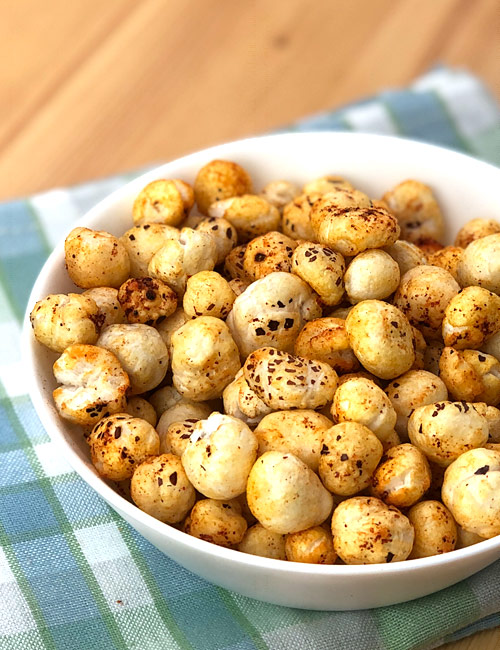
Roast the makhana. Heat a dry pan on medium-low flame. Add fox nuts and dry roast for 4–5 minutes, stirring constantly, until they turn crisp and emit a light, nutty fragrance. Remove and set aside.
Puff the gond. Heat 3–4 tablespoons of ghee in a kadhai on medium flame until hot. Drop gond pieces in small batches (5–6 at a time). They will puff up within 5–10 seconds. Remove immediately with a slotted spoon before they brown or darken. Drain on a plate and let cool completely, then crush lightly with your hands into rough pieces.
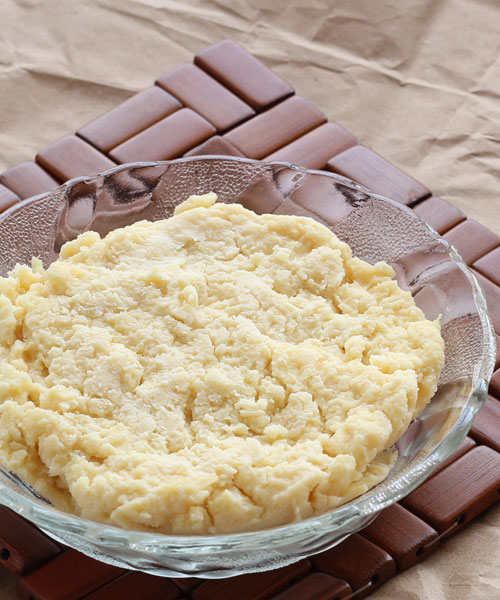
Roast the khoya. Remove excess ghee from the kadhai, leaving a thin film. Add khoya and roast on low flame for 6–8 minutes, stirring continuously, until it turns light golden and starts to look slightly grainy. Do not walk away — it scorches quickly. Remove and set aside.
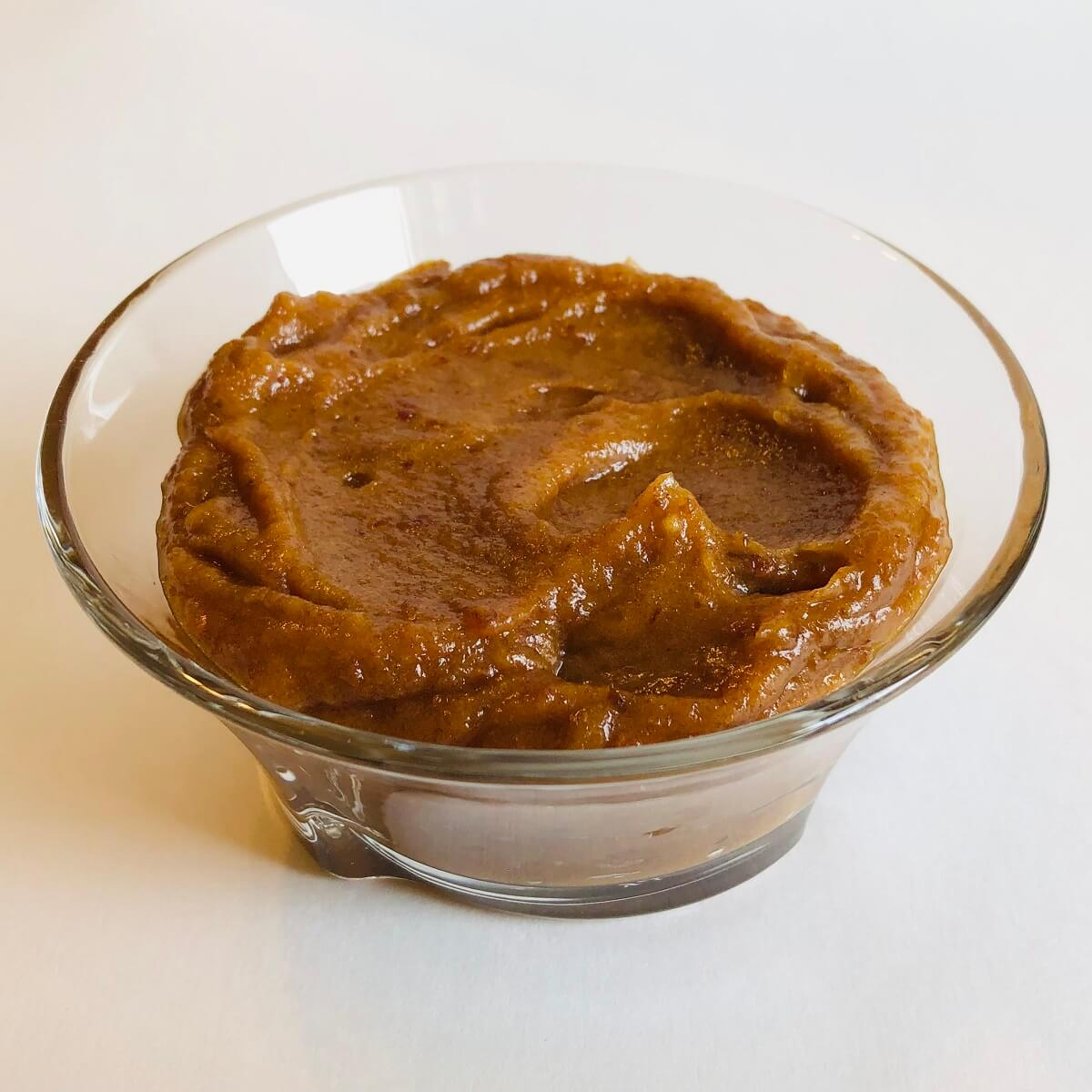
Cook the dry date paste. Add remaining ghee to the kadhai on low-medium flame. Add the date paste and cook for 7–9 minutes, mashing and stirring constantly with a spatula, until the mixture darkens slightly and pulls away from the sides of the pan.
Combine all ingredients. Lower the heat to minimum. Add roasted khoya, crushed gond, grated coconut, ground almonds and cashews, roasted makhana, cardamom powder, and khaand. Stir thoroughly for 2–3 minutes until everything is evenly distributed. Taste and adjust sweetness.
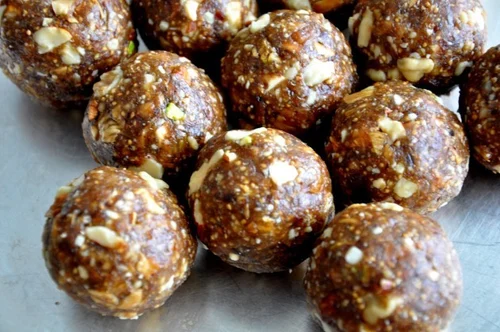
Shape the laddus. Turn off the heat. Allow the mixture to rest for 2–3 minutes — it should still be warm and pliable. Grease your palms with a small amount of ghee. Scoop a portion (approximately 45g), press firmly, and roll into a smooth round ball. Work quickly; the mixture firms up as it cools.
Cool and store. Place shaped laddus on a tray and allow to set at room temperature for 20–30 minutes. Store in an airtight container at room temperature for up to 3–4 weeks, or refrigerate for up to 6–8 weeks.
Benefits of Dry Dates Khoya Laddu
- Natural energy without a crash. Dry dates provide sustained energy from natural fructose and glucose, without the spike-and-drop of refined sugar. These laddus are a smarter mid-afternoon or pre-workout snack than most packaged options.
- A bone-building combination. Khoya, gond, and chhuara are each rich in calcium and phosphorus. Together they make this laddu notably supportive of bone density — something most sweets cannot claim.
- Traditional postpartum and winter nourishment. Gond is warming in nature and has been used in Indian households for decades as a recovery food for new mothers and a winter energy boost for everyone else.
- Exceptional shelf life for a homemade sweet. No fresh cream, no fruit, no moisture-prone base — these laddus stay good at room temperature for 3–4 weeks, making them ideal for gifting, meal prep, or keeping at the office.
- No refined flour, no artificial ingredients. Every ingredient in this recipe is whole and recognisable. For professionals who want to eat well without reading labels, this is the kind of snack that earns its place.
- Gut-friendly fiber from multiple sources. Dry dates, coconut, and gond each contribute fiber, supporting digestion and sustained satiety.
Nutrition Value
Serving size: 1 laddu (approximately 45g)
Estimated values. Not laboratory verified.
| Nutrient | Per Serving |
|---|---|
| Calories | ~195 kcal |
| Total Fat | ~11g |
| Carbohydrates | ~22g |
| Protein | ~4g |
| Sodium | ~25mg |
| Fiber | ~2.5g |
| Sugar | ~14g |
Fat content comes primarily from ghee, khoya, and nuts. Sugar is largely natural (from dry dates) with a small addition of khaand.
Who Should Avoid
- People with diabetes. This laddu contains natural sugars from dry dates plus added khaand. Even without refined flour, the sugar load is significant. Consume in strict moderation and only with a doctor’s guidance.
- Individuals with dairy allergies or lactose intolerance. Khoya and ghee are both dairy-derived. This recipe is not dairy-free.
- People with tree nut allergies. Almonds and cashews are present throughout. There is no nut-free version of this recipe without significant reformulation.
- Pregnant women (regarding gond). Gond is considered ushna (heat-generating) in Ayurvedic tradition. Some practitioners advise against it during pregnancy due to its warming properties. Consult your gynaecologist before consuming.
- Children under 2 years. Coarsely ground nuts and gond pieces pose a choking risk. The high fat and sugar content is also unsuitable for very young children.
- Individuals with kidney disease. Dry dates and nuts are naturally high in potassium and phosphorus — both of which must be restricted in kidney disease.
If you are unsure whether this dish is right for you, consult a doctor or nutritionist.
The History of Dry Dates Khoya Laddu
The laddu is likely the oldest documented Indian sweet. The 3rd–4th century Ayurvedic text Sushruta Samhita describes small balls — ladduka — made from jaggery, sesame, and peanuts coated in honey, prescribed not as a treat but as medicine and antiseptic. Over the following centuries, the laddu evolved from functional food into festive staple, taking on regional forms shaped by local ingredients, climate, and occasion. Today it appears at weddings, temples, birthdays, and festivals across every part of the subcontinent.
The use of gond (edible gum) in laddus reflects a specifically North Indian and Rajasthani tradition of warming winter foods. Gond, a natural resin harvested from Acacia trees, was prized in traditional medicine for its ability to strengthen bones, joints, and the back. Combined with dry dates and khoya — two ingredients long associated with nourishment and recovery — the gond laddu became a postpartum ritual food given to new mothers during the 40-day chilla (recovery) period. The same combination was made in winter months across Punjab, Rajasthan, and Uttar Pradesh as protection against cold, fatigue, and seasonal illness. Vyanjika’s Dry Dates Khoya Laddu draws directly from this tradition.
Frequently Asked Questions About Dry Dates Khoya Laddu
Can I use fresh khoya or does it need to be a specific kind?
Fresh khoya (also called mawa) works well. Look for the danedar or batti variety — they roast well and give the laddu a slightly grainy texture that works with the other ingredients. Avoid using very wet or smooth khoya as it may make the mixture too sticky to shape.
How long do dry dates khoya laddus keep, and do they need to be refrigerated?
At room temperature in an airtight container, these laddus stay good for 3–4 weeks. Refrigerated, they last 6–8 weeks. The high ghee content and absence of fresh dairy or fruit means they are naturally long-lasting. Bring refrigerated laddus to room temperature for 10–15 minutes before eating for the best texture.
Can I make this chhuara laddu recipe without gond?
You can skip gond if unavailable, but it changes the recipe meaningfully. Gond adds a distinctive puffed, slightly crunchy texture and contributes warmth and bone-strengthening properties. Without it, the laddu will be softer and denser. If you skip it, reduce the ghee by 2–3 tablespoons to compensate for the reduction in bulk.
Is this dry dates laddu suitable for people who avoid refined sugar?
Partially. The dry dates contribute significant natural sugar. The added khaand (crushed sugar) can be reduced or replaced with powdered jaggery for a less-refined version. This will not make the laddu low-sugar — it will remain naturally sweet — but jaggery adds iron and a more complex flavour.
What equipment do I need to make dry dates laddu at home?
A heavy-bottomed kadhai or pan is essential for even heat distribution when roasting khoya and cooking the date paste. You will also need a mixer grinder for grinding the date paste and chopping the nuts, and a spatula for constant stirring. No specialised equipment is required beyond standard Indian kitchen tools.
Can I add other dry fruits to this khoya laddu recipe?
Yes. Dried figs, raisins, or pistachios can be added alongside or in place of the almonds and cashews. Keep total nut and dry fruit additions proportional — too much will make the mixture dry and difficult to shape. We recommend not exceeding 150g total for nuts and additional dry fruits in a 1 KG batch.
 No products in the cart.