
Coconut Khoya Laddu is one of the few Indian sweets where every single ingredient carries a story. Fresh grated coconut and milk-solid khoya form the base — two ingredients that between them cover the full range of fat, protein, and binding that a no-flour laddu needs. Into that base go fried gond for crunch and bone support, crispy makhana for protein and texture, raisins for natural sweetness, and almonds roasted in ghee. At Vyanjika, we make this coconut khoya laddu recipe for people who want the richness of traditional Indian mithai without any substitutions or shortcuts. This recipe asks for patience across several sub-processes, and it rewards that patience with a laddu that is genuinely hard to find anywhere else.
Ingredients
Makes approximately 25 laddus (1 kg total)
- Kasa Hua Nariyal (fresh grated coconut) — 300g
- Khoya (milk solids / mawa), crumbled — 260g
- Ghee (clarified butter) — 160g
- Gond (edible gum / acacia gum) — 60g
- Makhana (fox nuts / lotus seeds) — 80g
- Khaand (crushed sugar / desi khand) — 150g (adjust to taste)
- Kishmish (raisins) — 50g
- Badam (almonds), roughly chopped — 50g
Difficulty Level
Difficulty: High — This recipe has eight sequential sub-processes, each with its own flame requirement, timing window, and sensory cues. Gond and makhana must each be fried separately at the right temperature; the coconut must cook completely dry before khoya is added; and the mixture must be shaped at the correct temperature window.
How to Make Coconut Khoya Laddu
Prepare first — gond and makhana

Fry the gond. Heat a portion of ghee in a heavy-bottomed kadai on medium-low flame. Test by dropping one piece of gond — it should begin to puff within 15–20 seconds. Fry in small batches. Each piece puffs up within 30–60 seconds into a light, honeycomb-like ball. Remove with a slotted spoon onto absorbent paper the moment it is fully puffed. Cool completely, then crush coarsely by hand or rolling pin — irregular crunchy pieces, not powder.
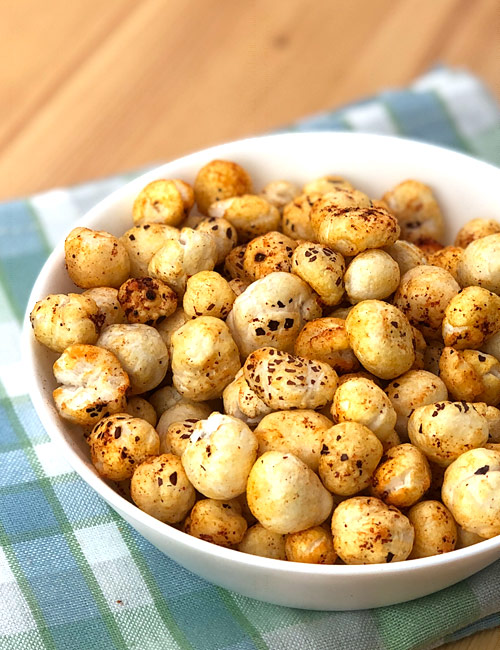
Fry the makhana. In the same kadai with a little ghee on low flame, add the makhana in a single layer. Stir continuously on low heat for 3–4 minutes until they turn lightly golden and snap sharply when broken with no soft spot inside. Remove onto a plate to cool completely. Crush roughly once cooled — coarse pieces, not dust.
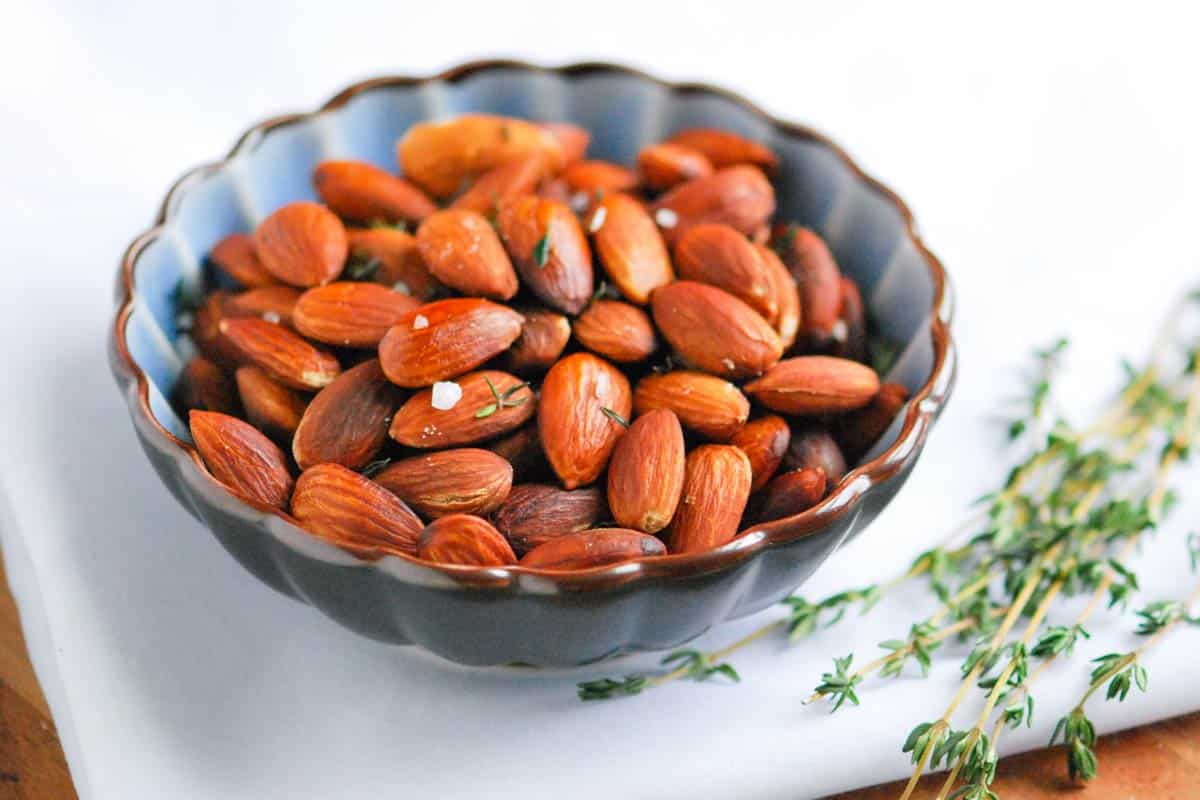
Roast the almonds. In the same pan with a small amount of ghee, stir chopped almonds on low heat for 1–2 minutes until lightly golden and fragrant. Remove immediately and set aside.
Build the base
Add the remaining ghee to the kadai on medium-low flame. Add the grated coconut and stir continuously for 10–15 minutes until the coconut turns dry, fragrant, and lightly golden at the edges. Do not rush — underdone coconut retains moisture that prevents khoya from binding properly.
Add khoya. Reduce to low flame. Crumble the khoya into the cooked coconut and stir continuously for 5–8 minutes until the khoya melts into the coconut and the mixture becomes a thick, fudge-like mass that pulls away from the sides of the pan.
Add khaand. Remove from heat. Add the khaand and mix thoroughly. Return to the lowest possible flame for 1–2 minutes if needed. Do not overcook after sugar is added.
Combine and shape
Combine all elements. Transfer the coconut-khoya-khaand mixture to a wide plate and cool to warm — comfortably warm to the touch. Add the crushed fried gond, crushed fried makhana, roasted almonds, and raisins (no frying needed for raisins). Mix gently until evenly distributed.

Shape the laddus. Lightly grease palms with ghee. Take approximately 40g of the warm mixture and press firmly in the palm, then roll between both palms into a smooth ball. Press firmly — this is a no-flour laddu, so cohesion comes from the coconut-khoya matrix, not a flour binder. Arrange on a tray and allow to set for 30–60 minutes.
Store. Transfer to an airtight container. At room temperature: 3–4 days. Refrigerated: up to 10 days. Bring to room temperature before serving.
Benefits of Coconut Khoya Laddu
- Makhana — the superfood in every bite. Fox nuts carry nearly 10g protein per 100g, negligible fat, a low glycemic index, and kaempferol — a natural antioxidant linked to reduced inflammation. Most laddus have no ingredient like this.
- No flour, just real ingredients. Coconut and khoya provide all the binding — every gram of weight is a gram of something that nourishes: coconut MCTs, dairy protein, gond minerals, makhana antioxidants, raisin iron, almond Vitamin E.
- Bone and recovery support from gond. Edible gum provides calcium, phosphorus, and magnesium alongside its signature crunch. It is the cornerstone ingredient in postpartum recovery laddus across North India and brings the same mineral profile to every serving here.
- Naturally gluten-free. No wheat, semolina, or any gluten-bearing ingredient. Safe for those with gluten intolerance or coeliac disease.
- Coconut MCTs for sustained energy. Fresh grated coconut is rich in medium-chain triglycerides, particularly lauric acid, which the body uses as an immediate energy source rather than storing as fat — giving this laddu a different energy profile from grain-based sweets.
- Festive and everyday range. Suitable for Diwali gifting, Ganesh Chaturthi offerings, and weekly snack preparation. It travels well and holds its shape.
Nutrition Value
Per serving: 1 laddu (~40g), from a batch of approximately 25 laddus
| Nutrient | Amount |
|---|---|
| Calories | ~203 kcal |
| Total Fat | ~14.4g |
| Carbohydrates | ~16.9g |
| Protein | ~2.7g |
| Sodium | ~18mg |
| Fiber | ~1.6g |
| Sugar | ~13.5g |
Values are estimates from standard nutritional databases. Saturated fat (~10.5g per serving) comes predominantly from coconut and ghee. Protein is above average for a traditional laddu, contributed by khoya and makhana.
Who Should Avoid
- People with dairy allergy. Khoya contains all milk proteins (casein and whey). Ghee retains trace milk proteins. Anyone with a diagnosed dairy/milk protein allergy should avoid this recipe.
- People with lactose intolerance. Khoya retains natural milk sugars (lactose). Those with moderate-to-severe lactose intolerance may experience digestive discomfort.
- People with tree nut allergies. This recipe contains almonds, a declared tree nut allergen. Coconut is also classified as a tree nut by the US FDA. Consult your allergist if uncertain.
- People on calorie-restricted or low-fat diets. At approximately 203 kcal per 40g laddu, with significant fat from coconut, khoya, and ghee, this is not appropriate for calorie-restricted diets without strict portion control.
- People with diabetes. Khaand, lactose from khoya, and natural sugars from raisins represent a significant combined glycemic load. Diabetics should consult their doctor before including this in their diet.
- People with kidney disease. Khoya, coconut, and raisins all contribute potassium and phosphorus. Those with CKD on mineral-restricted diets must consult a renal dietitian before consuming.
- Pregnant women (regarding gond). Gond is traditionally given after delivery, not during pregnancy. Consult a doctor before consuming gond-containing preparations during pregnancy.
- People with cardiovascular disease or very high LDL. The saturated fat from coconut and ghee is significant. Those with pre-existing heart disease should consume sparingly and under dietary guidance.
If you are unsure whether this dish is right for you, consult a doctor or nutritionist.
The History of Coconut Khoya Laddu
The Coconut Khoya Laddu is a genuinely pan-Indian sweet — assembled from four distinct regional traditions. Coconut comes from the coastal south: sacred in Hindu tradition as Sriphal (Fruit of the Gods), offered at temples from Tirupati to Goa, woven into festival calendars from Assam’s Bhogali Bihu to Maharashtra’s Ganesh Chaturthi, where coconut sweets are offered as naivedyam to Lord Ganesha at the height of the celebration. Khoya comes from the north: the concentrated milk-solid that is the backbone of the entire North Indian mithai tradition, originating in Gujarat and perfected in the sweet-making city of Mathura in Uttar Pradesh, where India’s production of approximately 600,000 metric tons of khoya annually reflects its continued centrality to Indian culinary culture. Makhana comes from the east: the fox nut cultivated in the wetlands of Bihar’s Mithila region, classified as medicinal in the 16th-century Ayurvedic text Bhavaprakasa, and awarded a Geographical Indication tag by the Indian government in 2022 — an ancient superfood now recognised globally.
Gond comes from the northwest: the Rajasthani and Punjabi winter tradition of edible acacia gum fried in ghee and given to new mothers for 40 days after delivery to rebuild bones, joints, and strength — a practice still alive in households across North India today. Each of these four ingredients carries its own century-old tradition. This nariyal khoya laddu brings them together in a single preparation — a convergence that is less recipe development and more a natural completion of what Indian culinary culture was already building across regions, centuries, and seasons.
Frequently Asked Questions About Nariyal Khoya Laddu
Can I use desiccated coconut instead of fresh grated coconut?
Yes, but reduce the quantity to approximately 250g — desiccated coconut is drier and more concentrated than fresh. The flavour will be less fragrant and the texture slightly drier. You may need to add 1–2 tablespoons of warm milk or ghee to the mixture to maintain the right pliability for shaping.
How do I know when the gond is properly fried?
Properly fried gond is very light, uniformly white-golden, and shatters cleanly when pressed. It should look like a small crispy ball or honeycomb. Any piece that is dark brown was overfried and will taste bitter. Any piece that is dense or chewy is undercooked — return it to the ghee briefly.
Why must the makhana be crushed and not left whole?
Whole makhana creates uneven texture and makes shaping difficult. Crushed makhana distributes evenly through the mixture, ensures crunch in every bite, and integrates better with the coconut-khoya base. Crush to coarse, irregular pieces — not powder.
How long do coconut khoya laddus keep?
At room temperature in an airtight container: 3–4 days. Refrigerated: up to 10 days. Fresh coconut limits room-temperature shelf life compared to flour-based or date-based laddus. Always bring refrigerated laddus to room temperature before serving.
My laddus are not holding their shape — what went wrong?
Almost always a coconut-cooking issue. If the coconut was not cooked long enough before the khoya was added, the mixture will be too wet to bind. Return the full mixture to the pan, cook on low flame for another 5–10 minutes stirring constantly, cool to warm, then reshape.
Can I make this without gond if I cannot find it?
Yes — the laddu will hold and taste good without gond. Increase the makhana by 30g to partially compensate for the textural difference. The yield will be slightly less than 1kg.
 No products in the cart.