
Gur Till Laddu is one of the most ancient sweets in India — a two-ingredient confection of white sesame seeds and jaggery that has been made in Indian households for thousands of years. We make it at Vyanjika exactly as tradition dictates: no shortcuts, no additives, just roasted sesame and melted jaggery pressed into perfect rounds. For anyone who wants a genuinely wholesome, refined-sugar-free sweet without spending a Sunday afternoon at the stove, this is the one we always recommend. Each batch yields 30–33 laddus, meaning you have a week of guilt-light snacking ready in under 30 minutes.
Ingredients for Gur Till Laddu
- White sesame seeds (White Til) — 560 g
- Jaggery (Gud/Gur) — 560 g
- Water — 3 tablespoons (to melt jaggery)
- Neutral oil — 1 teaspoon (for greasing palms while shaping)
Difficulty Level
Difficulty: Medium — The technique is straightforward, but reaching the jaggery soft-ball stage requires focused attention; a few seconds over or under can affect texture.
How to Make Gur Till Laddu
Measure and prepare. Weigh 560 g sesame seeds and 560 g jaggery. If your jaggery is in block form, break it into roughly equal small pieces for even, fast melting.
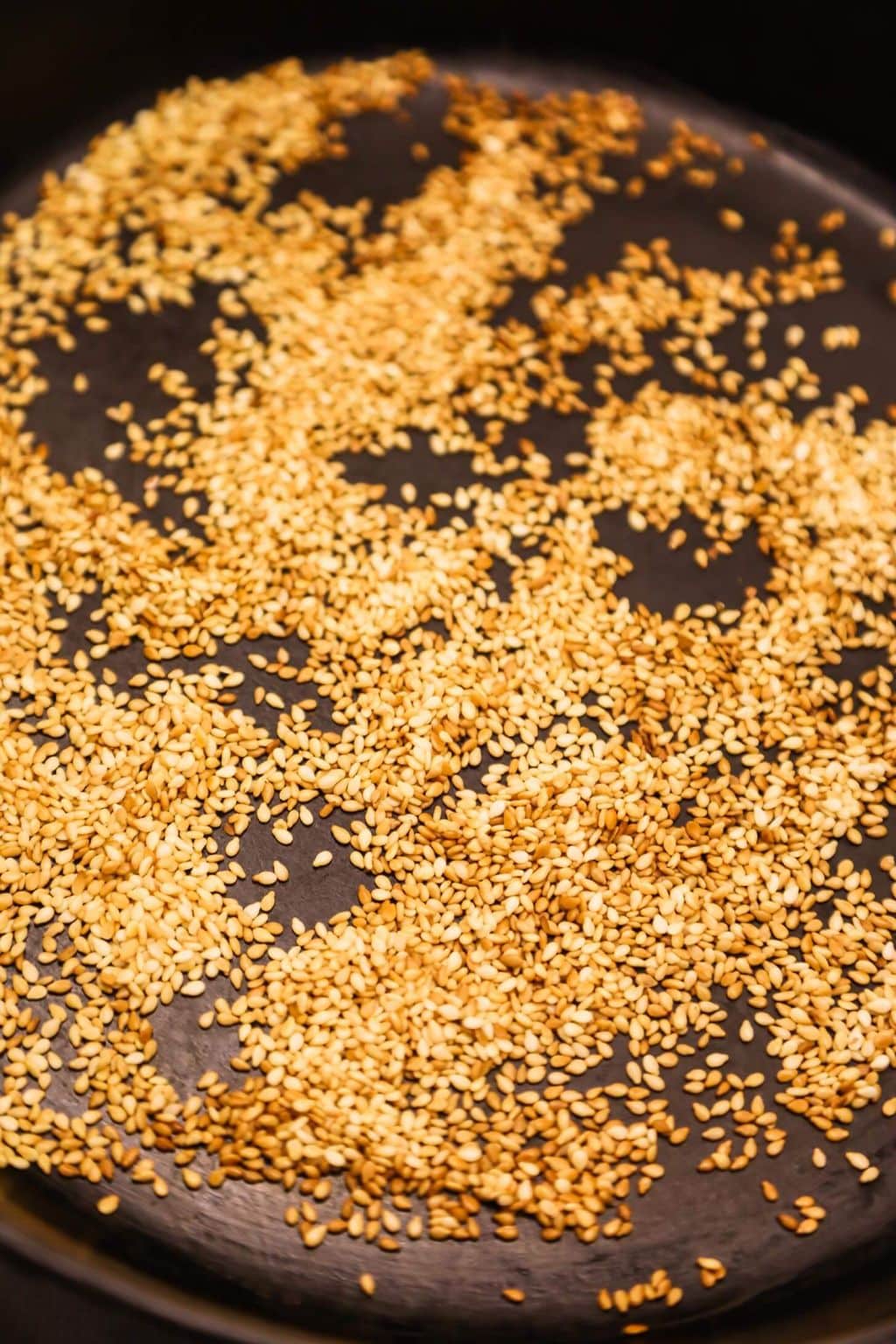
Dry roast the sesame seeds. Heat a heavy-bottomed pan on low-medium flame. Add the sesame seeds and roast, stirring continuously, for 6–8 minutes until they begin to pop and turn a very light golden. They should smell nutty but not bitter. Remove from heat and set aside.

Melt the jaggery. In the same pan on low flame, add the jaggery pieces and 3 tablespoons of water. Stir continuously until the jaggery fully melts and the mixture begins to simmer, approximately 3–4 minutes.
Cook to soft-ball stage. Continue cooking the jaggery syrup on low-medium flame, stirring often, for another 4–6 minutes. Test for soft-ball stage: drop a few drops of syrup into a small bowl of cold water. If the drops form a soft, pliable ball that holds its shape but is still slightly sticky, the syrup is ready. Do not skip this test.
Combine sesame and jaggery. Switch off the heat immediately. Add all the roasted sesame seeds to the jaggery syrup and mix quickly and thoroughly until every seed is coated and no dry patches remain.

Shape the laddus. Allow the mixture to cool for 1–2 minutes — just enough to handle safely. Lightly grease your palms with oil. Scoop approximately 30 g of the mixture and press firmly, rolling between both palms into a round ball. Work quickly; the mixture sets within 8–10 minutes.
Set and store. Place shaped laddus on a parchment-lined plate or tray. Allow to cool completely at room temperature for 20–30 minutes until firm. Store in an airtight container.
Benefits of Gur Till Laddu
- Refined-sugar-free energy. We sweeten only with jaggery, which retains iron, antioxidants, and trace minerals that refined sugar loses during processing — so each laddu delivers sweetness with nutritional value attached.
- Winter-ready warmth. Sesame seeds are classified in Ayurveda as a hot potency food that generates internal body heat and lubricates joints. This makes Gur Till Laddu especially suited to colder months and morning routines when your body needs a steady energy start.
- Clean-label, two-ingredient recipe. No preservatives, no artificial flavours, no additives. What you see on the ingredient list is all that goes in — making this one of the most transparent traditional sweets available.
- Long shelf life, ideal for meal prep. Stored in an airtight container at room temperature, these laddus stay fresh for 2–3 weeks. One batch covers a full fortnight of snacking without any refrigeration required.
- Vegan, gluten-free, and nut-free. Gur Till Laddu fits a wide range of dietary needs. It contains no dairy, no gluten, no eggs, and no nuts — making it easy to share across dietary preferences.
- Rich in calcium and iron. Sesame seeds are one of the best plant-based sources of calcium, and together with the iron in jaggery, each laddu provides meaningful micronutrient support in a small, portable form.
Nutrition Value
Per serving: 1 laddu (~30 g)
| Nutrient | Amount |
|---|---|
| Calories | 143 kcal |
| Total Fat | 7.5 g |
| Carbohydrates | 18.3 g |
| Sugar | 14.8 g |
| Protein | 2.8 g |
| Dietary Fiber | 1.8 g |
| Sodium | 6 mg |
| Calcium | ~90 mg |
| Iron | ~2.1 mg |
Values are estimates calculated from standard USDA nutritional data for white sesame seeds and jaggery.
Who Should Avoid
- People with diabetes or pre-diabetes. Jaggery has a glycemic index of approximately 84, similar to refined sugar, and causes rapid blood glucose spikes. We recommend strict avoidance for uncontrolled diabetes; those with well-managed blood sugar should limit intake to one laddu per day and consult their doctor first.
- People with sesame allergies. Sesame is a major allergen and the primary ingredient in this recipe. Anyone with a sesame allergy must avoid Gur Till Laddu entirely.
- Individuals managing high triglycerides or metabolic syndrome. The significant natural sugar content of jaggery can worsen elevated triglyceride levels. Dietary guidance from a doctor applies here.
- Children under two years. The sticky, dense texture of these laddus poses a choking hazard for very young children, and the sugar content is too high for infants and toddlers.
If you are unsure whether this dish is right for you, consult a doctor or nutritionist.
The History of Gur Till Laddu
Gur Till Laddu traces its origins to ancient India, where sesame was among the first crops offered in harvest rituals and to ancestors in Vedic ceremonies. In Hindu mythology, sesame seeds are said to have sprung from Lord Vishnu’s perspiration that fell to Earth — a belief that elevated the seed to sacred status and made it a staple of religious offerings. The combination of sesame and jaggery emerged naturally from both the agricultural calendar and Ayurvedic wisdom: both ingredients are winter crops, both are warming to the body, and together they provided labourers and farmers with dense, portable nourishment through the cold months.
The sweet is most famously linked to Makar Sankranti, the harvest festival celebrated across India each January as the sun begins its northward journey. In Maharashtra, these laddus are exchanged with the greeting “Tilgul ghya, god god bola” — meaning “Take sesame and jaggery, and speak sweet words.” The phrase encodes a social philosophy: sesame represents goodwill and jaggery represents sweetness in relationships. In Gujarat the same day is marked as Uttarayan, where Til Ke Laddu holds an equally central place on every family’s table. For a sweet that requires only two ingredients and less than thirty minutes, few foods carry as much cultural weight per gram.
Frequently Asked Questions About Gur Till Laddu
Can I substitute black sesame seeds for white sesame seeds?
Yes. Black sesame seeds have a stronger, more robust flavour and a higher antioxidant content than white sesame seeds. The resulting laddus will be darker in colour and slightly more bitter, but the technique stays the same. We use white sesame seeds in our standard Gur Till Laddu recipe for a milder, more broadly appealing flavour.
How long do Gur Till Laddus keep?
Stored in an airtight container at room temperature, these laddus stay fresh for 2–3 weeks. Avoid refrigerating them — the cold can make jaggery sweat and the texture becomes sticky. Keep them in a cool, dry spot away from direct sunlight.
Can I make Gur Till Laddus in advance?
Yes, and we recommend it. These laddus are actually better after 24 hours, once the jaggery has fully set and the flavours have deepened. A single batch made on a Sunday covers healthy snacking through most of the working week.
Is Gur Till Laddu suitable for vegans?
Yes, completely. The Til Ke Laddu recipe contains only sesame seeds and jaggery — no dairy, no honey, no eggs, no animal products of any kind.
What happens if I cook the jaggery syrup too long?
Over-cooked jaggery sets into a hard, brittle candy-stage syrup. The resulting laddus will be very hard and may crack or crumble rather than holding a soft, chewy texture. If this happens, the mixture is not recoverable — so watch the soft-ball test carefully and pull the pan off heat the moment the test succeeds.
Do I need any special equipment to make Gur Till Laddu?
No. A heavy-bottomed kadhai or pan, a spatula, and a small bowl of water for the syrup test are all you need. A kitchen scale is helpful for accurate measurements given the quantity involved.
 No products in the cart.