
Kaju Nimki is a classic deep-fried savory snack shaped like a cashew nut, beloved across Indian households during Diwali, Holi, and festive gifting season. We make our kaju nimki recipe with just four simple ingredients — maida, refined oil, sugar, and salt — keeping it honest, clean, and free from any artificial additives. At Vyanjika, we believe the best snacks are the ones you can trust, which is why we share our full recipe openly. Whether you are picking up a jar for yourself or gifting it to someone who deserves a proper homemade treat, Kaju Nimki delivers the satisfying crunch that no packaged alternative can match.
Kaju Nimki Ingredients
Yield: 1 kg (approximately 33 servings of ~30g each)
- Maida / Refined Wheat Flour — 600g (approximately 4¾ cups)
- Refined Oil — 75ml for dough (approximately 5 tablespoons) + additional for deep frying
- Chini / Refined Sugar — 1½ teaspoons
- Namak / Salt — 1½ teaspoons
Note: Additional refined oil is required for deep frying. Use a deep wok or kadhai with enough oil to fully submerge the nimki pieces.
Difficulty Level
Difficulty: Medium — The technique is straightforward, but achieving consistent crunch requires two things: the right oil-to-flour ratio when making the moyan, and patience with low-heat frying throughout.
How to Make Kaju Nimki
Prepare the moyan (fat rub)
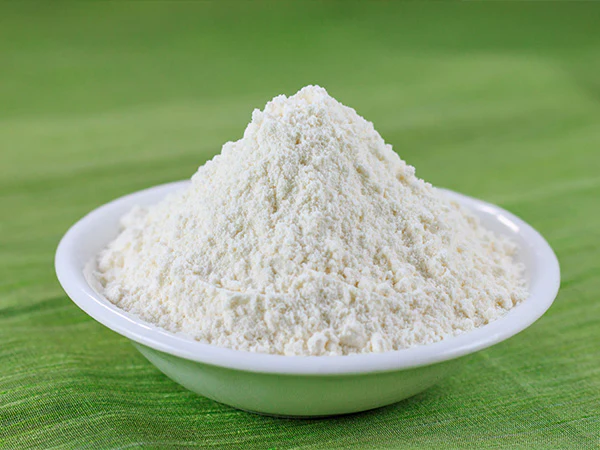
- Sift 600g maida into a large mixing bowl. Add 1½ teaspoons salt and 1½ teaspoons sugar. Mix well.
- Add 75ml refined oil to the flour. Rub the oil into the flour with your fingers for 3–4 minutes until the mixture resembles coarse breadcrumbs. To test: press a handful — it should hold shape without crumbling. This moyan step is what makes the nimki flaky rather than dense.
Make the dough
- Add cold water gradually, a little at a time, and knead into a firm, stiff dough. Do not make it soft. Over-soft dough absorbs too much oil during frying. The dough should feel smooth but firm.
- Cover the dough with a damp muslin cloth and rest for 30–45 minutes at room temperature.
Shape the nimki
- Divide the rested dough into 6–8 equal portions. Keep unused portions covered to prevent drying.
- Roll one portion thin on a lightly floured surface to approximately 2–3mm thickness.
- Use a small round cutter (4–5cm diameter, a bottle cap works well) to cut circles. Then cut each circle in half to create the cashew crescent shape. Collect dough scraps and re-roll once.
- Lightly prick each piece 2–3 times with a fork to prevent puffing during frying.
Fry
- Heat enough refined oil in a deep wok or kadhai over medium-high heat. Test the oil: drop a small piece of dough in — it should rise to the surface within 2–3 seconds. The oil is ready.
- Reduce heat to LOW before adding the nimki. This is essential — frying on high heat produces dark, bitter nimki with a raw-dough centre.
- Add nimki in batches without crowding the pan. Fry on low heat for 8–12 minutes per batch, turning occasionally, until they turn a pale golden to light golden brown. They will crisp up further as they cool.
- Remove with a slotted spoon and drain on paper towels.
Cool and store
- Spread drained nimki in a single layer and cool completely at room temperature — do not stack while warm.
- Once fully cooled, store in an airtight container. Shelf life: 2–3 weeks at room temperature.
Benefits of Kaju Nimki
- Clean ingredient list: We make Kaju Nimki with only four ingredients — no artificial colour, no preservatives, no flavour enhancers. You know exactly what you are eating.
- Long shelf life, perfect for meal prep: A single batch lasts 2–3 weeks in an airtight container, making it an ideal snack to prepare in advance and keep on hand through a busy work week.
- Dairy-free and egg-free: Made entirely with plant-based ingredients, Kaju Nimki suits vegetarian and vegan diets and is safe for those with dairy or egg allergies.
- Satisfying in small portions: The high fat content from refined oil makes even a small 30g serving genuinely satisfying — less snacking, less mindless reaching for the next handful.
- Festive presentation, every day: The cashew shape makes this nimki gift-worthy and visually distinct on any snack platter, without requiring any special skill to achieve.
Nutrition Value
Per serving (30g, approximately 8–10 pieces):
| Nutrient | Amount |
|---|---|
| Calories | ~160 kcal |
| Total Fat | ~8.5 g |
| Carbohydrates | ~20 g |
| Protein | ~2.5 g |
| Sodium | ~130 mg |
| Fiber | ~0.4 g |
| Sugar | ~1 g |
Values are estimates based on ingredient composition of deep-fried maida-based snacks. Actual values vary with oil absorption during frying.
Who Should Avoid
- People with celiac disease or gluten sensitivity — Kaju Nimki contains maida (refined wheat flour), which contains gluten. It will cause an adverse reaction in those with celiac disease.
- People with diabetes or high blood sugar — Maida has a very high glycemic index (GI 85+), causing rapid blood sugar spikes. People managing diabetes should avoid or strictly limit this snack.
- People on low-sodium diets — Salt is a core ingredient. Those managing hypertension or kidney conditions on a sodium-restricted diet should be cautious about portion size.
- People on low-fat or weight-loss diets — Deep frying makes this a calorie and fat-dense snack. It is not suitable as a regular snack for those actively reducing fat intake.
- Young children under 2 — The hard, crunchy texture poses a choking hazard and is not appropriate for toddlers.
If you are unsure whether this dish is right for you, consult a doctor or nutritionist.
The History of Kaju Nimki
Nimki belongs to a family of deep-fried savory crackers that span the Indian subcontinent under different regional names — Namak Pare in North India, Kucho Nimki in Bengal, Shankarpali in Maharashtra. The word “nimki” is derived from “namak,” the Hindi word for salt, pointing directly to the snack’s defining quality. Across eastern India — particularly Bengal, Bihar, and Odisha — nimki has been a fixture of festive kitchens for generations, prepared in large batches ahead of Durga Puja, Diwali, and Vijaya Dashami to serve guests and exchange as gifts.
The cashew-shaped variant, Kaju Nimki, emerged as a festive innovation, with the crescent or half-moon shape chosen to mimic the silhouette of a cashew nut. This shape became especially popular in Diwali snack platters and gift boxes, where visual variety across shapes and sizes was part of the celebration. As an unleavened, deep-fried cracker, nimki also carries a practical heritage — frying in oil extends shelf life to several weeks, making it perfectly suited to festive seasons when large quantities are prepared well in advance.
Frequently Asked Questions About Kaju Nimki
Can I substitute maida with atta (whole wheat flour) in this nimki recipe?
You can replace up to 50% of the maida with atta for added fibre and a slightly nuttier flavour. Using 100% atta will result in a denser, less flaky nimki — the texture will be noticeably different from the traditional version.
How long does Kaju Nimki keep?
Stored in an airtight container at room temperature, Kaju Nimki stays fresh and crispy for 2–3 weeks. Make sure the nimki are completely cooled before sealing the container, as residual warmth creates moisture and softens the snack.
Can I bake kaju nimki instead of frying?
Yes. Brush or lightly spray shaped nimki with oil and bake at 180°C (350°F) for 15–18 minutes, flipping once halfway, until golden. The baked version will be less rich and slightly less flaky than the fried version, but still enjoyable.
Is kaju nimki suitable for vegans?
Yes. This recipe uses only maida, refined oil, sugar, and salt — no dairy, no eggs, no animal products of any kind. It is fully suitable for a vegan diet.
Why is my nimki coming out soft instead of crispy?
Two common reasons: the dough was too soft (add less water next time and knead to a stiff consistency), or the oil was too hot during frying. Always fry on low heat. High heat seals the outside before the inside cooks through, resulting in a soft interior once it cools.
What equipment do I need to make kaju nimki at home?
You need a mixing bowl, rolling pin and board, a small round cutter (a bottle cap or 4–5cm cutter), a fork for pricking, a deep wok or kadhai, a slotted spoon, and paper towels for draining. No specialised equipment is required.
 No products in the cart.